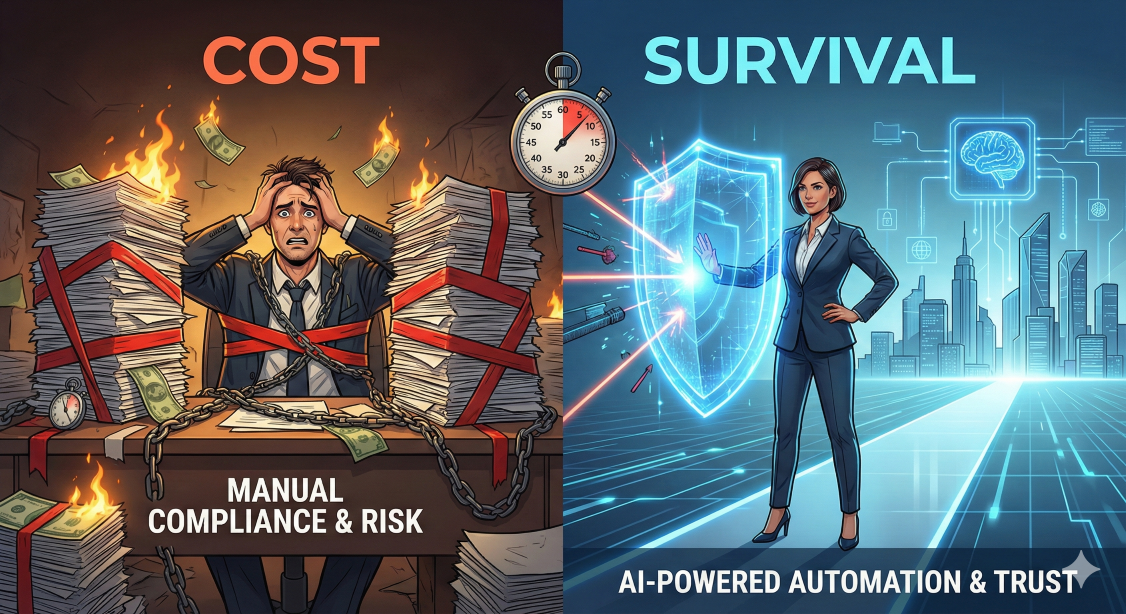


For businesses today, compliance is more than a mere legal obligation; it is a core management process that ensures trust and sustainability.However, as information security, personal information, and industry-specific regulations continue to be strengthened, the ‘weight of certification’ that companies must bear has become heavier than ever..
Can the existing human-centered consulting approach really continue to navigate these complex waves? We examine the harsh realities of the market and alternatives contained in R&D plans.
1. “One certification alone is not enough”: The diversifying regulatory environment
In the past, possessing just a single specific certification was sufficient. However, companies are now in an environment where they must hold multiple domestic and international certifications depending on their business area..
- Mandatory domestic certification: Mandatory when reporting to the Financial Services Commission ISMS-P Certifications and similar requirements are stringent regulations that, if not possessed, may make business registration impossible or result in the suspension of operations.
- Global Expansion: In order to expand overseas ISO 27001, GDPR(europe), HIPAAInternational certifications by country and industry, such as (US medical), have become a mandatory entry ticket.
- Emergence of New Areas: AI GovernanceISO 42001), autonomous driving(ISO 21434New regulatory areas such as ), ESG, etc., are constantly emerging, increasing the difficulty of responding.
In reality, the current situation is that over 70% of service organizations are simultaneously supporting at least six or more frameworks..
2. The ‘Fatal Limitations’ of Human Resource-Centered Consulting
Many companies rely on external consulting to resolve this complexity.However, the method of humans manually reviewing documents and providing guidance has reached a clear limit..
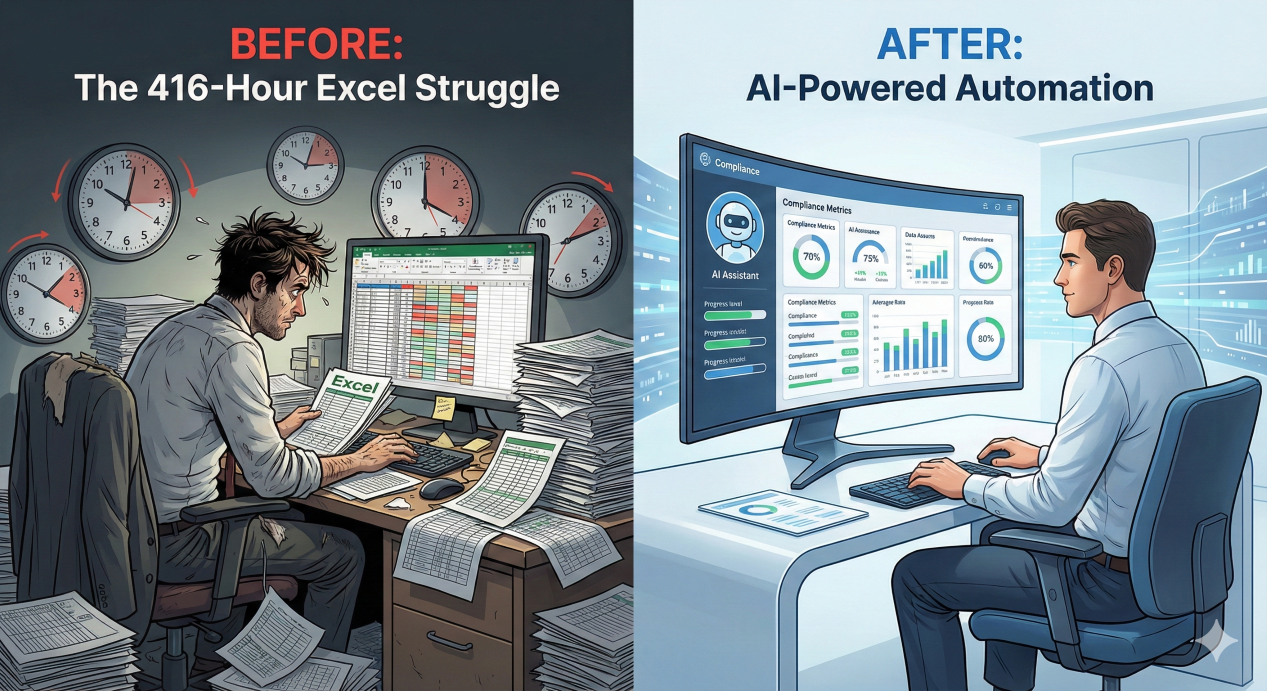
- Unsustainable cost structure: The number of regulations to respond to is increasing, but the preparation process remains largely manual. Annual average per person in charge 416 hoursCompanies are pouring resources into manual work, and more than 60% of companies are increasing their compliance budgets every year.
- Duplication of work and inefficiency: A document-centric approach leads to inefficient production and verification of operational documentation. Furthermore, the workload is concentrated solely on security policy managers, often causing critical core security tasks to take a backseat.
- Volatility of Knowledge: Even with high-cost consulting, the know-how for responding to certifications is not internalized within the organization and relies solely on external personnel, resulting in double costs every year and recurring problems such as dereliction of responsibility.
3. Solution: System internalization through ‘AI Agent’
In order to bridge the gap between complex regulations and limited human and financial resources Compliance Response AutomationIt is urgent..
KlariskNext-generation solutions like this go beyond simply managing checklists and aim to become **’AI agents that make decisions and act on their own like compliance officers’**.
- Maximizing Cost Efficiency: AI performs document analysis and rule mapping to minimize resource waste.
- Internalization of knowledge within the organization: We reduce reliance on external consulting and establish a customized response system based on internal regulations and documents.
- Multi-framework integration response: Instead of a single certification, you can establish an automated response system for multiple regulations by integrating and analyzing the common foundation among various frameworks such as ISO 27001 and GDPR.
conclusion
Relying solely on human resources for compliance is now akin to “pouring water into a bottomless pit.” To survive in an increasingly complex certification environment, the adoption of intelligent systems that understand the meaning of regulations and autonomously evaluate evidence is essential..
It is now time to transform corporate compliance from a ‘cost’ into a ‘sustainable asset’ through automation.